Function and purpose in the quality control process
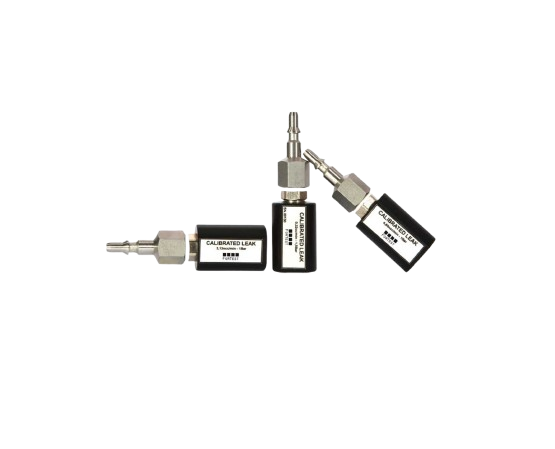
The T0730 represents a fundamental metrological equipment for ensuring the reliability and precision of leak testing systems. Its primary function is to simulate a controlled and certified leak, allowing operators and quality managers to verify that testing systems work correctly and detect leaks within specified tolerances. This validation process is essential in ISO-certified productions where periodic demonstration of test system effectiveness is required. The calibrated nozzle allows these verifications to be performed quickly, simply and repeatably, without the need for complex equipment or laborious procedures.
Sintered Material Technology
The heart of the T0730 consists of a sintered stainless steel element, a porous material obtained through a controlled metallurgical process that creates a homogeneous structure of interconnected pores. This technology ensures a constant and stable leak over time, a fundamental characteristic for a metrological reference standard. Unlike other systems based on calibrated orifices or capillary nozzles, sintered material offers greater mechanical robustness, insensitivity to vibrations and wear resistance. Stainless steel also provides excellent corrosion resistance, allowing use with different gases and in even severe industrial environments, without performance degradation over time.
Customization and Configurability
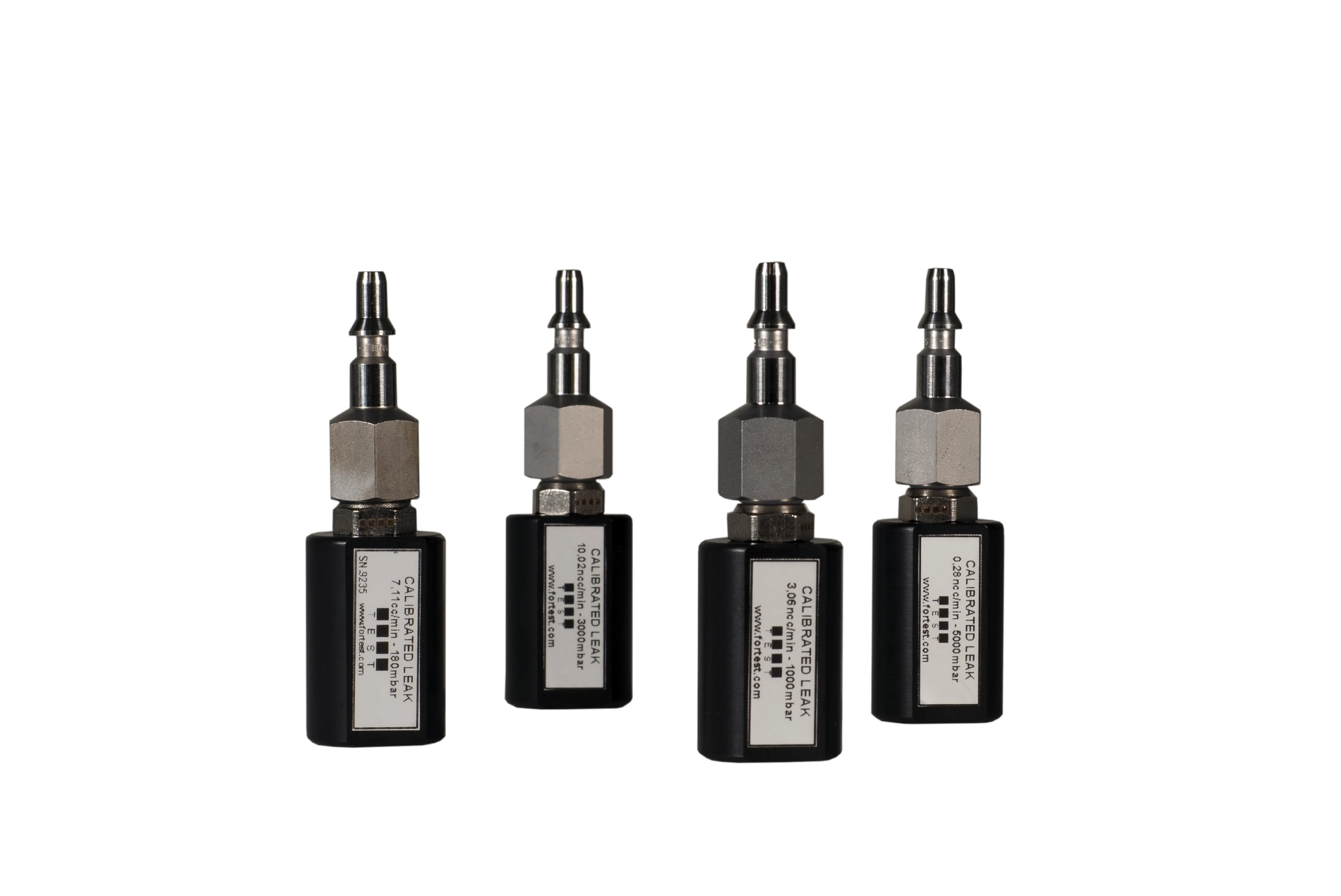
Each T0730 is manufactured according to customer specifications based on the pressure and flow values required by the specific application. Flow scales cover a very wide range, from 200 cc/min for applications on small components with low leakage, up to 100 l/min for larger systems or with less stringent leak testing requirements. The pressure full scale can be selected between -1 bar (vacuum applications) and 10 bar (pressure applications), allowing validation of test systems under the same operating conditions as real components. The declared accuracy of ±5% plus 2 cc/min refers to certification conditions and ensures excellent repeatability for periodic verifications.
Certification and traceability
Each calibrated nozzle T0730 is supplied with a calibration certificate that reports the measured flow values at different working pressures. SIT traceability (Italian Calibration Service, member of EURAMET) ensures that the measurements performed are traceable to national and international standards, an essential requirement for quality certifications and management system audits. The certificate includes all identifying data of the nozzle, measurement conditions, calibration uncertainties and certification validity. This level of documentation allows companies to demonstrate compliance with industry regulations and the most rigorous quality standards.
Usage and Connection Methods
The T0730 is designed for maximum ease of use and installation versatility. The dual connection option offers flexibility based on requirements: the 1/8″ BSP male threaded fitting is ideal for permanent or semi-permanent installations in dedicated test benches, while the Stäubli®® male quick connector allows for rapid tool-free connections and disconnections, ideal for periodic checks on different lines or for mobile use. The compact weight of only 28 grams makes the device easy to handle and transport. The protective case supplied as standard protects the nozzle from impacts, dust and contamination during storage, preserving the metrological characteristics over time.
Compatibility with different gases
The T0730 is compatible with different working gases: compressed air (the most common in industrial applications), nitrogen (used when oxidation or chemical reactions need to be avoided) and hydrogen (employed in forming gas tests or in applications with hydrogen detectors). This versatility allows the same calibrated nozzle to be used to validate test systems that work with different gases, optimizing investments in metrological standards. It is important to use the nozzle with the same gas for which it was certified, or apply any correction factors if the working gas is changed, to maintain the declared accuracy.
Pressure and vacuum applications
A distinctive feature of the T0730 is its ability to operate both in pressure (from 0 up to 10 bar) and in vacuum (up to -1 bar). This makes it suitable for validating a wide range of leak testing systems: from differential systems that work at low relative pressures, to absolute pressure drop systems, up to vacuum tests used for specific components such as refrigeration systems or vacuum systems. The possibility of selecting the pressure full scale during ordering ensures that the nozzle is optimized for specific operating conditions, maximizing precision and reliability of verifications.
Stability over time and maintenance
One of the most appreciated characteristics of the T0730 is its exceptional stability over time. The sintered stainless steel material does not undergo significant variations in permeability characteristics even after thousands of usage cycles, unlike other systems that may be subject to wear, clogging or performance drift. This stability reduces the need for frequent recalibrations, while it remains advisable to periodically verify (typically annually) the calibration through checks with primary instruments or by sending to an accredited laboratory. The required maintenance is minimal: it is sufficient to protect the nozzle from mechanical impacts, avoid contamination with oils or dust, and store it in the protective case when not in use.
Importance in quality management
The use of certified calibrated leaks is an explicit or implicit requirement in many industry regulations and quality standards. ISO 9000 management systems require demonstration that measurement and control systems are calibrated and verified periodically. The T0730 provides exactly this capability, allowing the generation of objective evidence of the reliability of testing processes. The investment in certified calibrated nozzles pays for itself extensively in terms of regulatory compliance, reduction of quality risks, and customer confidence in the company’s ability to provide reliable products.